Cats, Canaries and One Very Confused Kangaroo: The Unofficial Crews of the Grand Fleet
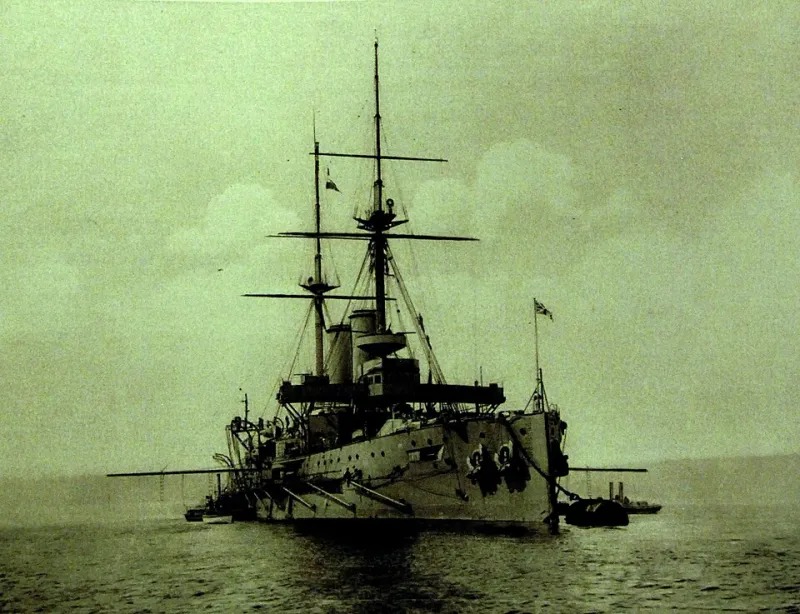
Photo: National Museum of the U.S. Navy, Public domain, via Wikimedia Commons
Ask a veteran of the Grand Fleet what he remembered of Scapa Flow and the answer is rarely a dreadnought. It is more often the cold, the waiting, and the ship's cat asleep on a cordite locker. Animals were everywhere in the wartime Royal Navy, and almost nowhere in its official records. Ships' logs noted coal consumed, complement borne and defects remedied; they did not note the grey tabby that had belonged to the stokers' mess since Devonport. To reconstruct this menagerie one must read against the grain: photographs, letters home, memoirs written decades later, and the occasional exasperated entry in a captain's standing orders.
The Working Cat
Cats were the most numerous animals afloat and the least controversial. A battleship was a floating warehouse, and warehouses attract rats. Vermin in the bread room was an nuisance; vermin in a magazine, where cordite bags sat in silk-lined cases, was a hazard no officer cared to contemplate. Ships' cats therefore performed a function that could be justified in the most hard-headed terms, and commanders who would not have tolerated a pet tolerated a ratcatcher.
They belonged, in practice, to a mess rather than to the ship. A cat was fed from the mess trap, named by acclamation, and mourned if it went over the side. There was a widely reported superstition that a cat leaving a ship before sailing was an ill omen, which says less about feline behaviour than about the nerves of men who had little else to think about. At anchor in a crowded harbour, cats moved between ships with the confidence of an admiral shifting his flag.
Dogs Bought at the Dockyard Gate
Dogs were the aspirational mascot. A bluejacket going ashore at Devonport or Chatham might return with a puppy small enough to conceal in a kitbag, and a destroyer's company might club together to buy one at a foreign port. Larger ships often acquired a mascot more formally, presented by a town, a dockyard or a well-wishing mayor, complete with a name that the lower deck promptly replaced with something less respectful.
A dog had to be fed, and feeding it meant taking from a mess already stretched by rationing and inflation, which is why mascots were a collective expense and a collective source of pride. Their behaviour under fire varied as much as their owners'. Some slept through heavy firing; others were terrified, and sympathetic accounts of the latter are among the more revealing documents of the war at sea, since they admit a fear that the memoirists rarely admitted for themselves.
Canaries, Monkeys and Something from Australia
Birds were common in engine and boiler rooms, where a small cage might hang well clear of the machinery. The canary's sensitivity to foul air had long made it a companion of miners, and engineers found a similar reassurance in a bird that sang. Whether the practice was officially encouraged is doubtful; that it existed is not.
Beyond the birds lay the exotic. Monkeys were bought in Mediterranean and West African ports and were seldom a good idea. Goats served as mascots in small ships, with predictable consequences for paintwork. And at least one kangaroo, brought aboard by an Australian draft, appears in several albums of the period, photographed among grinning ratings who seem less surprised by their passenger than the modern reader might expect. The animal's fate is not recorded in any source we have traced.
Regulations That Were Never Going to Work
Admiralty Fleet Orders were issued repeatedly on the subject of animals aboard, and repeatedly ignored. The objections were reasonable: hygiene, the risk of disease, the quarantine rules of foreign ports, and the difficulty of landing an animal when a ship was suddenly ordered to sea. Port health authorities took their own view, and captains discovered that a mascot was a diplomatic liability in a neutral harbour.
Inspection parties therefore met with a remarkable uniformity of denial. The ship's dog, when challenged, belonged to a visiting officer; the cat was a stray that had arrived that morning. Officers who signed such reports were not fools. A captain who removed a popular mascot risked a sullen ship, and a sullen ship in wartime is a poor instrument. Command was, in this small matter as in others, a negotiation.
Mourning, Superstition and the Long Wait
When a mascot died there was often a funeral, with a sewn canvas shroud, a bugler and a party under arms, the whole conducted with an earnestness that a landsman might find absurd and that a rating would not. The ceremonies were partly a joke and partly not. In a war of long waits and short violences, any occasion for ritual was welcome.
The deeper function of the animals was simpler. A dog on the forecastle, a cat on a warm hatch, a canary singing in an engine room: each was a fragment of ordinary life, carried deliberately to sea. In letters home, sailors asked after their own pets with an anxiety they did not spend on their own prospects. The animals gave them something to be responsible for at the end of a watch, and something to talk about that was not the war.
The official naval history of 1914 to 1918 will never include a chapter on the unofficial crews. It does not need to. The photographs do the work well enough, and they show a navy that tolerated, fed and mourned its animals precisely because the war gave it so much reason to want them.