The Clipboard Blockade: Why the Gunroom Prefers Jutland to the Cruisers That Stopped the Neutrals
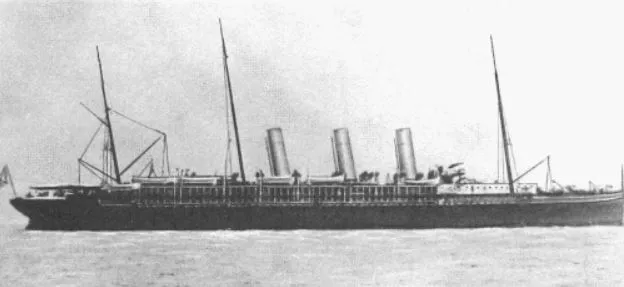
Photo: Unattributed, Public domain, via Wikimedia Commons
British naval memory is a matter of silhouettes. The battlecruisers at Jutland, the wreck of the Queen Mary, the armoured decks of the line: these are the images that have shaped a century of remembrance. Yet the most consequential British naval effort of the war was conducted, for the most part, by converted liners whose officers spent their mornings wading through bills of lading.
This is an argument, not a survey. It holds that the Northern Patrol and the contraband control system it served did more to decide the outcome of the war than any encounter of the main fleets, and that Britain's preference for the drama of May 1916 over the drudgery of 1914 to 1918 has distorted both its memory and its understanding of the war at sea.
A Line Drawn Across the Coldest Sea in Europe
The geography is straightforward and brutal. To reach Germany through the north, a merchant ship had to pass between Scotland and Iceland, through the waters patrolled by the Tenth Cruiser Squadron, a force built around armed merchant cruisers. These were requisitioned liners, thinly armoured, armed with old guns, and crewed largely by reservists. In appearance they were exactly what they were: stopgap warships in an unfashionable theatre.
They stopped ships. That was the work: boarding parties in oilskins, a lieutenant in the waist of a neutral steamer, the master's papers examined, a manifest compared against a contraband list that grew every month, and a decision taken in the middle of the Atlantic.
How the System Actually Worked
Contraband control was a bureaucracy fitted to a warship. The lists of prohibited goods were extended by order in council, first to conditional contraband and eventually to almost any commodity with a military use. Then came the navicert, a certificate issued in advance to shippers who could demonstrate that their cargoes were not destined for the enemy, which turned the patrol from a hunting exercise into an inspection exercise and vastly reduced friction at the point of boarding.
The machinery behind it was an apparatus of committees and ministries, and it is no accident that this history belongs under fleet logistics. The blockade was not won by guns; it was won by shipping intelligence, consular reports, insurers and clerks.
The Cumulative Effect
The effect on Germany was not dramatic in any single month. It was cumulative, and it became catastrophic. Import restrictions tightened into shortages, shortages into rationing, and rationing into the only half-remembered episode that most modern readers know: the turnip winter of 1916 and 1917, when the civilian potato supply failed and the German diet collapsed into fodder vegetables and substitute bread.
By the armistice, the German food economy was exhausted and the memory of hunger was political dynamite. That outcome was produced by the patrol officers with their clipboards, and it is not a sentimental claim to say so; it is what the German internal record itself shows.
The Costs the Fleet Preferred Not To Count
The blockade had a bill. It infuriated the United States, whose notes of protest treated British interference with neutral commerce as an assault on the freedom of the seas. It strained relations with Norway, Sweden, Denmark and the Netherlands, all of whom watched their trade strangled. It forced British ministers to defend the starvation of women and children in the language of legal formality, which is always an uncomfortable performance.
And there is the strategist's uncomfortable question: did the blockade's tightening push Germany toward unrestricted submarine warfare in 1917, and therefore help to cause the very crisis that nearly broke Britain in the spring of 1917? The two policies were locked together. Britain starved Germany; Germany answered with the U-boat; and Britain responded with convoys. The chain did not begin with the submarine.
Why We Remember the Wrong Thing
The answer is that the blockade never had its own hero. No single engagement, no burning wreck, no photograph of a great ship going down. Its officers were performing customs duty at sea in the worst weather in the Atlantic, and the men lost on the armoured merchant cruisers — the Hawke, the Viknor, the Clan Macnaughton among them — have no memorial comparable to the Jutland roll.
There is also the matter of national taste. Jutland is a story about fighting, and fighting is what nations like to remember. The blockade is a story about stopping ships that were doing no harm, in a legal grey zone, with the aim of making a whole economy unworkable. It is hard material for a centenary. It is easy material for a serious history.
So let us make the claim plainly. The Royal Navy's greatest contribution to the defeat of Germany was not the Grand Fleet's guns, which fired for about twenty minutes of decisive contact. It was the dull, cold, endlessly repeated act of boarding a neutral ship and asking to see her papers.