Borrowed Time in a Neutral Land: British Seamen Interned in the Netherlands, 1914-1918
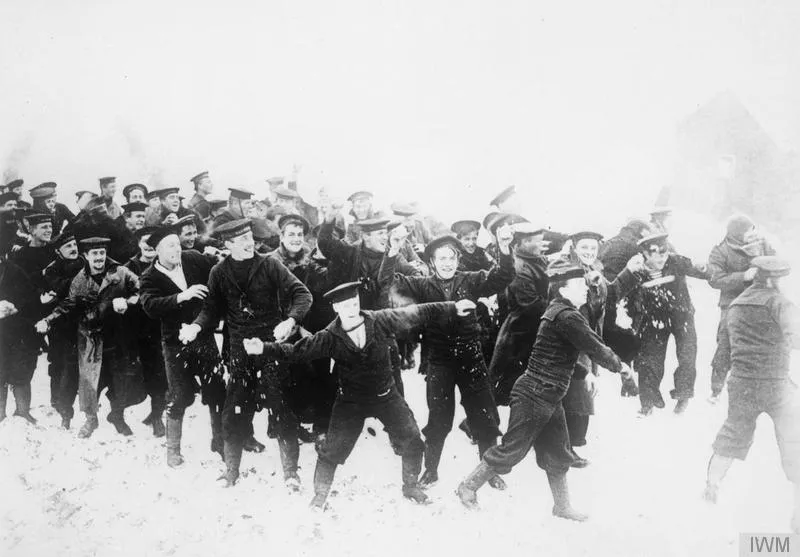
Photo: Unknown authorUnknown author, Public domain, via Wikimedia Commons
The Netherlands spent the First World War doing something harder than fighting: it spent four years refusing to. Dutch neutrality was armed, anxious and legally rigorous, and one consequence of that rigour was a category of men whose war stopped without ending. British sailors whose ships were stranded, sunk or driven ashore in Dutch waters found themselves interned under the law of nations, held in camps and barracks for the duration, and released only when the armistice made their detention pointless.
The Law That Held Them
Internment rested on the Hague Convention of 1907 concerning the rights and duties of neutral powers. A neutral state was obliged to interning belligerent troops that entered its territory, and the obligation extended to sailors who came ashore after a wreck or a grounding. The alternative, allowing fighting men to depart for their own country, was a breach of neutrality that The Hague was not prepared to risk. So the men were held.
The numbers were never vast by the standards of the Western Front, but they were sufficient to matter: soldiers who had crossed the Belgian border in 1914, notably after the fall of Antwerp, and a steady trickle of sailors thereafter. Among the naval cases were submarines forced to beach on the Dutch coast, whose crews were interned while their boats were later salvaged or returned. The submarine E17, driven ashore in January 1916, is among the better documented examples; her men joined an English-speaking population of internee labour, football matches and canteen beer.
Camp Life and the Discipline of Idleness
The Dutch housed their interned British in camps and requisitioned barracks, and the conditions varied from the tolerable to the grimly monotonous. Officers were generally offered parole and considerable freedom of movement in a designated town, subject to their word not to escape and not to take part in hostilities. Ratings had less liberty and more routine: roll calls, fatigues, compulsory walks, and an unrelenting diet of boredom.
The men organised themselves as sailors and soldiers do, which is to say they improvised. There were camp newspapers, English classes, theatricals, boxing, and a good deal of gambling. There were also the disciplinary problems that follow from confining several hundred fit young men with nothing to occupy them, and the Dutch records are candid about them. The internees were not prisoners of war and could not be compelled to labour for their hosts, though the distinction was often academic in practice.
Escape, and the Reluctance to Attempt It
Escape from a neutral state was a strange offence. A man who got out of a Dutch camp and made it home had broken no law against Britain; he had broken Dutch law and embarrassed his own government, which had to apologise for him. The Foreign Office disliked escapes for exactly that reason, and the Dutch guarded against them with a seriousness that occasionally looked comic.
Most men stayed. Internment in the Netherlands was dull, but it was safer than a trawler sweeping minefields or a destroyer on convoy. This fact was understood at home and never quite forgiven, and it shadowed the internment story from beginning to end.
The Diplomacy of a Difficult Guest
For The Hague, the interned British were a daily balancing act. Germany complained when internees were treated leniently; Britain complained when they were treated as prisoners. Dutch authorities inspected, counted, censored mail and exchanged lists with both sides, all while maintaining a neutrality that was itself under constant pressure from blockade policy and, after 1917, from the submarines.
There were repatriation arrangements late in the day, and exchanges of invalid and long-serving internees through neutral ports. But for the majority the release came with the armistice, followed by an administrative scramble of trains, ships and paperwork as the internees were moved to Rotterdam and Flushing and shipped home.
Coming Home to Suspicion
Return was not always the welcome the men expected. A nation that had read four years of casualty lists found it difficult to celebrate men who had spent the war out of harm's way, and the phrase 'interned in Holland' acquired a certain sneer in some mouths. The men's service was also assessed unevenly when medals and pensions were determined, for the rules turned on whether a man had served in a theatre of war, and a Dutch camp was not one.
That quiet administrative indignity is the real subject of this history. The interned seamen were casualties of neutrality, held in a legal limbo that their own service record did not fully recognise. The boats they lost and the voyages they never made belong to the naval history of the war as much as any battle honour, and the files that record them deserve a better reading than they have generally received.