Anchored in Orkney: The Long Waiting of the Grand Fleet's Lower Deck
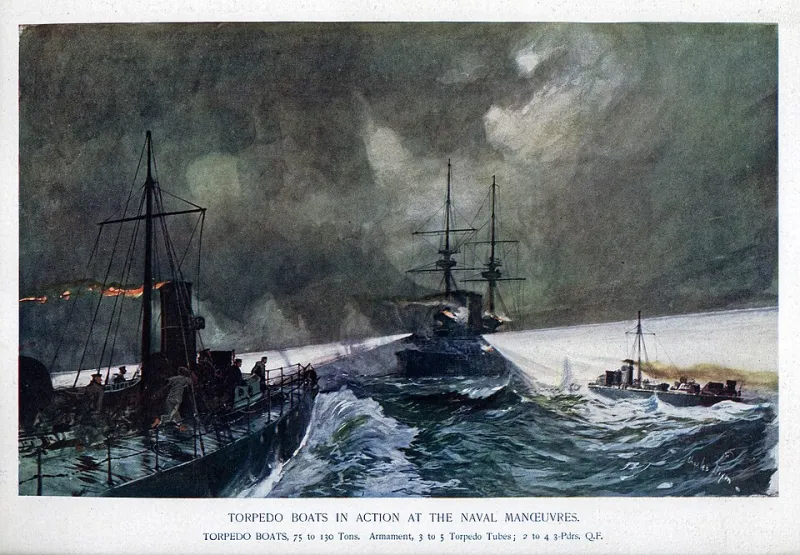
Photo: Charles Dixon, Public domain, via Wikimedia Commons
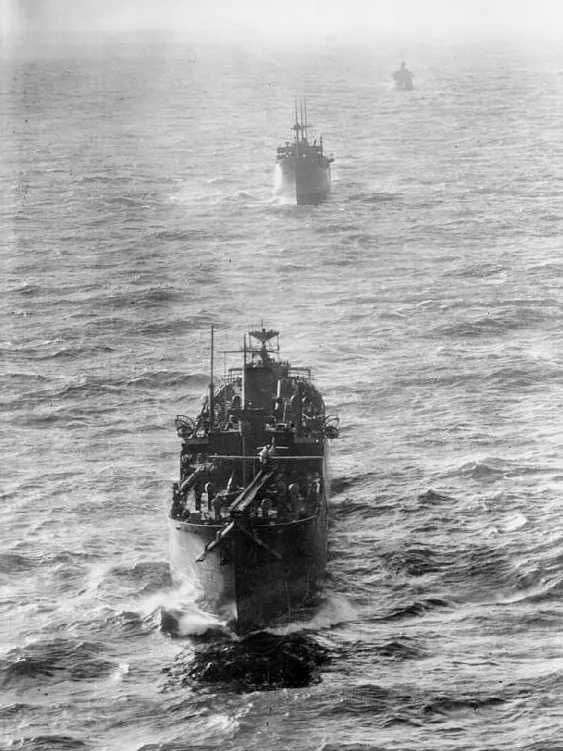
The Grand Fleet's war was, for the most part, a war of waiting. Between the opening weeks of 1914 and the armistice of November 1918, the battle squadrons based at Scapa Flow put to sea for gunnery drills, sweeps and fleet exercises, yet the decisive clash with the High Seas Fleet came only once, at Jutland in May 1916. The remainder of those four years was spent at anchor in a windswept anchorage off the northern tip of Scotland, where the principal adversaries were not German capital ships but damp, cold, boredom and the slow erosion of morale.
A Harbour Without Comforts
Scapa Flow offered a vast, sheltered expanse of water — nearly square, some 140 square miles — but almost nothing ashore. Unlike Rosyth or the Channel ports, there was no town of consequence, no promenade, no entertainment district. Kirkwall and Stromness lay over the hills, reachable only by drifter or the occasional fleet launch, and leave was rationed carefully. For the bulk of the lower deck, the ship was the world.
The climate did no favours. Winters in Orkney brought gales that swept the anchorage, and men off-watch slept in hammocks slung between great guns whose steel plating seemed to conduct the cold directly into their bones. Heating aboard the dreadnoughts was patchy at best; wardrooms fared better than the mess decks, where condensation ran down bulkheads and damp uniforms were a permanent grievance. One stoker, writing home to Portsmouth in January 1915, complained that his watch coat was 'wet for a fortnight at a stretch and never properly dry from one Sunday to the next'.
Watch Rotations and the Rhythm of the Day
The ship's routine was governed by the traditional watch bill, with two watches alternating through the day and the dogwatches providing the only variation. At anchor, the demands of steaming watches eased, but anchor watches, boat duty, coaling and ammunitioning parties filled the hours. Coaling ship was the great ordeal of fleet life — a full battleship load of some 3,000 tons shifted by hand in a single day, leaving the ship's company black with dust from the hold to the upper deck.
Gunnery training never paused. The Grand Fleet's commander, first Sir John Jellicoe and later Sir David Beatty, treated constant practice as the fleet's substitute for action. Drone of drill: gun crews worked their turrets until loading times were measured in seconds, range-finding parties exercised in all weathers, and defect rigs — improvised training mock-ups — were rigged below decks when weather made the upper deck unusable.
Canteen, Cocoa and the Economising of Morale
What kept the lower deck steady, according to the chaplains' reports and welfare correspondence preserved at The National Archives, was a mixture of small comforts and structured distraction. Each capital ship ran a canteen, stocked through the Navy and Army Canteen Board, where a man could buy cocoa, biscuits, tobacco and, within limits, a wet canteen issue of rum beyond the daily tot. Canteen profits fed ship's funds, which in turn paid for concert parties, ship's bands and sporting competitions held on the fo'c'sle or, weather permitting, ashore on the moors.
Educational schemes expanded as the war lengthened. The Admiralty, alarmed by early reports of restlessness, encouraged classes in navigation, mathematics and trade skills; the Grand Fleet's educational adviser reported thousands of men enrolled by 1917. Letter-writing, too, was a mainstay — the volume of mail moving between the anchorage and home ports like Portsmouth, Devonport and Chatham was considerable, and the arrival of the mail drifter was reliably recorded as the highlight of the week in ship's logs.
The Strain of Inaction
The psychological burden of long waiting was recognised, if not always well treated. Naval psychiatry was in its infancy, and men who broke down were more likely to face a captain's table than a doctor's care. Yet the correspondence of chaplains and commanding officers shows a genuine awareness of what was termed 'the monotony of the Flow'. Rear-Admiral commanding squadrons forwarded regular assessments of morale, and the introduction of short cruises to the Moray Firth or Belfast Lough — ostensibly for gunnery practice — served equally as relief from the anchorage's sameness.
Jutland briefly answered the question of what all this preparation was for. Thereafter, the High Seas Fleet's renewed inactivity deepened the sense of anticlimax. Men who had survived the battle wrote of a peculiar frustration: the great test had been met, and the fleet had returned to its cold anchorage to wait again.
Readiness as Strategy
Historians assessing the naval war have long argued that the Grand Fleet's mere existence at Scapa constituted a strategic victory — the blockade of German sea power achieved without fleet action. That argument holds, but it was paid for in the currency of ordinary men's endurance. The story of the Grand Fleet is not only one of dreadnoughts and gun ranges; it is the story of how an institution kept several hundred thousand sailors patient, occupied and battle-ready through years of wind, wet wool and waiting. The archive of that endurance — in mess logs, letters and the quiet entries of ship's diaries — remains one of the war's most revealing records.