Washday at Scapa: Soap, Rum and the Unseen Supply Lines of the Grand Fleet
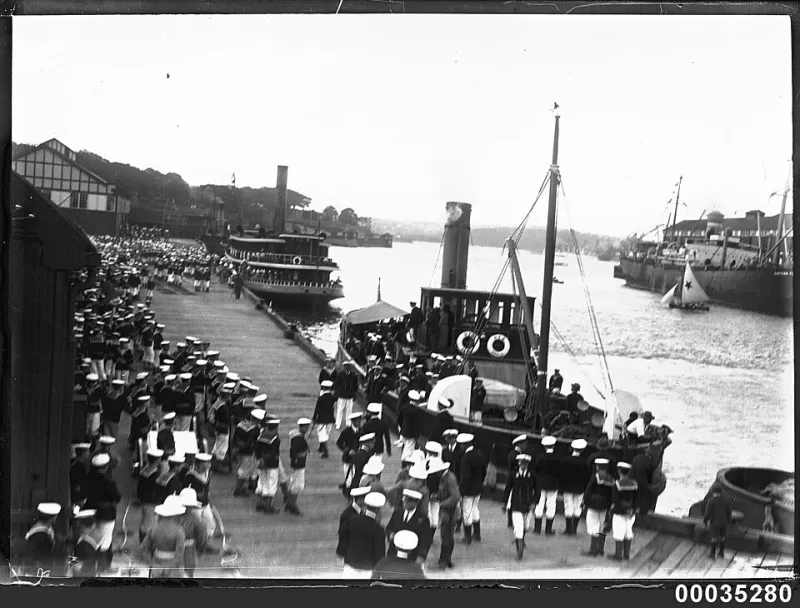
Photo: Australian National Maritime Museum on The Commons, No restrictions, via Wikimedia Commons
The Grand Fleet's presence at Scapa Flow was, in strategic terms, a matter of geography: a massed force of dreadnoughts blocking the northern exits to the North Sea. Yet strategy is executed by men, and men aboard an ironclad hull in Orkney required rather more than shells and boiler oil. The paymasters' records of the Home Fleet, preserved at The National Archives in Kew, reveal a parallel logistical campaign — one fought with carbolic soap, ship's tobacco and canteen credit.
The Freshwater Problem
Every ship of the Grand Fleet generated its own fresh water by evaporator, but the supply was never equal to demand. Boilers took priority; the men came a distant second. A battleship's company of eight hundred or more might be limited to a bucket of salt water for washing, with fresh water rationed strictly for drinking and cooking.
Laundry, therefore, became a fleet-wide enterprise. Once a week, when circumstances allowed, ships sent bundles ashore to Kirkwall or exchanged them with the fleet's auxiliary vessels. On other occasions, sailors made do with scrubbing clothes on the mess table using salt water soap — a harsh, tallow-based compound that lathered poorly and left woollens stiff. Lower-deck letters home to Portsmouth and Plymouth dockyard towns frequently complained of chilblains and salt-water sores, minor ailments that nevertheless crept into the sick bay returns.
The Rum and Tobacco Economy
The daily rum ration, drawn at noon in the shadow of the turret barbettes, was more than a tradition; it was a currency aboard. Paymasters' ledgers show a steady demand for tobacco, pipe cleaners and cigarettes from the canteen stocks, with the Navy and Army Canteen Board's steamers running a regular trade from the mainland to the Flow.
For the stokers and leading hands — men whose letters suggest they regarded Scapa's winter gales as a personal affront — tobacco was a psychological anchor. A leading stoker aboard a Queen Elizabeth-class battleship wrote home in 1916 that 'the baccy is dear but the days are long', a phrase that captures the canteen's role as a pressure valve for a fleet that spent months at anchor awaiting a battle that rarely came.
Clothing Issues and the Lower Deck
Kit maintenance was governed by the King's Regulations with bureaucratic thoroughness. Each man held a clothing account, credited annually, and the paymaster's issue books record a constant turnover of jumpers, collars, blue working cloth and duck trousers. The North Sea's damp penetrated everything: hammocks were aired on the upper deck when weather permitted, and the issue of thick jerseys rose sharply through the winter months.
The Admiralty's own sanitary reports noted that scabies and influenza tracked closely with the availability of soap and drying facilities. In this sense, the humble soap ration was a matter of fleet health — a point not lost on the Medical Director-General, who pressed repeatedly for increased soap allowances in the northern anchorages.
Why the Mundane Mattered
It is tempting to read naval history through gun calibres and battle orders. But the Grand Fleet's strategic weight derived from its presence, and presence depended on the tolerable daily existence of some 100,000 officers and men. A fleet that could not wash its company, issue dry clothing or supply the canteen would have eroded from within long before a German shell found its mark.
The paymasters' ledgers, dull as they appear, record the true sinews of sea power in the Great War: the soap, the rum, the tobacco and the shirts that kept the world's most formidable navy fit for the one battle it was designed to fight.