Cards in the Gunroom: The Quiet Hours Before the Battlecruisers Sailed
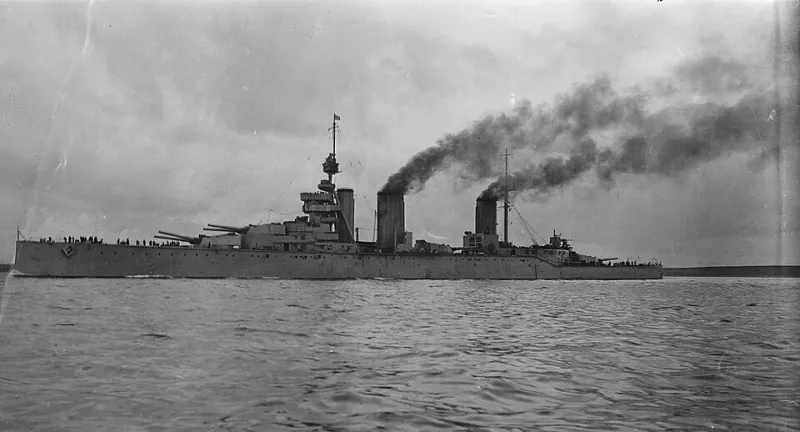
Photo: Oscar Parkes, Public domain, via Wikimedia Commons
The battlecruisers of the Grand Fleet's Battlecruiser Fleet were, in the spring of 1916, among the most recognisable warships in the world — and among the least understood by those who never served in them. To the public they were greyhounds, speed made visible in steel. To the roughly thousand men aboard each of them, they were cramped villages afloat, governed by routine, rumour and the peculiar arithmetic of chance.
A Ship Measured in Feet
Life below decks on HMS Lion, Tiger or Queen Mary was governed less by the sea than by steelwork. Hammocks were slung in tiers between the barbette structures; mess tables folded from the overhead; the air, in the confined flats amidships, carried the permanent odour of oil, damp wool and cooked mutton. Petty officers and ratings lived aft or forward in messes of a dozen or more, while the junior officers of the gunroom occupied quarters that a modern reader would describe as a corridor with furniture.
Ventilation was adequate at anchor and miserable in bad weather. When the squadrons put to sea for one of the Grand Fleet's frequent sweeps, hatches were sealed, and men off-watch slept in air that grew steadily warmer and staler. Veterans' letters from Rosyth in April and May 1916 make repeated mention of the same small miseries: the difficulty of drying clothing, the noise of the blowers, the impossibility of privacy.
The Devil's Own Arithmetic
What distinguished the lower deck of the Battlecruiser Fleet in those final weeks was gambling. Uckers — the Royal Navy's raucous variant of ludo — was universal, but it was the card schools that drew the larger stakes. Crown and Anchor, and endless hands of nap and pontoon, filled every off-watch hour that drill and coaling left spare.
Able Seaman's letters preserved in family collections describe stakes that could swallow a month's pay in an evening. One stoker writing from Queen Mary noted, with a fatalism that reads differently in hindsight, that "a man might as well lose it here as keep it for the torpedo." Payday aboard a battlecruiser was followed, reliably, by a day of ruined fortunes and one or two quietly desperate men. Ships' ledgers record advances against pay requested within hours of the fleet's money being issued.
The Admiralty tolerated this vice with a blind eye, on the reasonable grounds that a sailor gambling was a sailor not brooding. In a fleet that had spent two years sweeping a empty North Sea and finding nothing, the cards served a purpose no captain cared to abolish.
Nicknames and the Lower-Deck Nation
The ships ran on nicknames. Almost no rating served under his own name: men were Tug, Nobby, Dusty, Yeo or Lofty according to surname, and the system was applied with bureaucratic thoroughness. Officers were not exempt — captains acquired epithets that circulated through the squadrons faster than any official signal.
These names mattered. A ship's company of a thousand was too large for intimacy, but the mess, the division and the gunroom were small enough for genuine fellowship, and the nickname was the coin of that fellowship. Letters home are full of men identified only by their sobriquets — "our Tug got hit at Dogger," a mother's son writes, and the family apparently understands.
The Rumour Mill of the Forth
If gambling was the lower deck's recreation, rumour was its intellectual life. The fleet at Rosyth and Scapa was a sealed community, and speculation about the High Seas Fleet's intentions passed from mess to mess with every coaling order and ammunitioning evolution.
In the last week of May 1916, the talk was of the German battlecruisers reported off the Danish coast. Men who had waited two years for a fleet action found the prospect produced, in the letters and diaries that survive, not fear exactly, but a strange restlessness — an eagerness tempered by the folk wisdom that any battle would cost somebody dearly. Several accounts record bets laid on which ship would be hit first, wagers that would be settled within a day.
What the Magazines Held
Historians have written at length about the propellant charges, the cordite handling drills and the flash-tight doors that were not flash-tight. It is worth remembering what else those magazines held, in the human sense: the accumulated kit, letters, half-finished card games and private savings of a thousand young Britons — stokers from the Lancashire mills, boys from the Scottish fishing ports, leading seamen with a decade of salt in them.
When Lion's surviving sisters limped back to Rosyth in June 1916, the gunrooms and messes of Indefatigable, Queen Mary and Invincible were empty of the men who had dealt the cards and lost the pay. The battle is studied for its tactics and its cordite; the ships themselves are best understood, first, as the places where those men lived.
Sources and Further Reading
This account draws on lower-deck letters, diaries and pension records held at the National Museum of the Royal Navy, the Imperial War Museum collections, and published memoirs of Grand Fleet service, read alongside the official Jutland despatches.


